THE French are said to drink wine like the rest of us drink water, yet the incidence of heart disease among the French is said to be one of the lowest in the world. Cape Town-based South African Master of Wine and Judge, Cathy Van Zyl, 45, has some definite opinion about this health paradox.
True, the French drink a lot but the secret actually lies in HOW they drink, not how much they drink, she says. Wine education is the key. There is a way to drink wine and reap its health benefits. And that's what she goes round the world to tell people, she says. But read on. Much sought after worldwide as a wine judge, Cathy also has a reputation as a "perfectionist" who never hesitates to tell wine producers to their face "the unadulterated truth."
So how does she judge a winning wine from the rest? Just a simple acronym she invented called BLICC during her student days, she said. Read on again. Her insight on factors that impact wine quality should also help you rate food quality every time you eat a meal henceforth and perhaps inspire us why Sabah should pay attention on growing quality food crops!
Here to conduct a Wine Masterclass at Hyatt Regency Kinabalu early October on her way to Sydney for a wine judging stint, she talked to Daily Express on who are the big wine producers, why Italian Barolo wines are expensive and deserve to be expensive, how to order wines, what wines pair better with what foods, tips of cleaning your palate to enhance wine taste and issues like whether global warming is a threat to the wine industry.
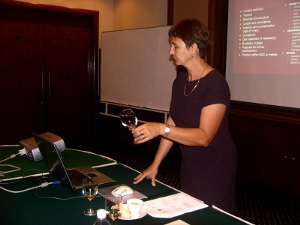
DE: Is wine judging your full time job?
CATHY: I also from time to time write for international publications and I contribute to South African chapter to a thick book on wine called Tom Steveson's Wine. So when it comes to wine, I am a judge and a journalist but most of all I am an enthusiastic consumer.
DE: Does South Africa grow a lot of grapes?
CATHY: A great deal. There are about 27,000 hectares under vineyards which is about the same size as Australia was three years ago. Australia has exceeded us in plantings. South Africa is currently Number 9. We export about 60% of our wines and we drink about the remaining 40% locally. And we produce whites, reds, sparkling, sweets - everything across the board.
DE: But isn't South Africa a hot country?
CATHY: South Africa is a very warm country compared to Europe of course. But the best thing about making wines in South Africa is that the vintage variation is not so great. If you are making wine in Germany or France for example, particularly in the northern zones of those countries, you can be impacted a great deal by the weather. So if you have a really bad winter and frost ridden spring, the quality of your grapes is not very good. So one year you have good quality crop, the next year you have bad quality crop. In South Africa, our climate is very constant, in Australia and in Chile too, we have fairly constant climate and the only variation you get is one winter was wetter than the other or one summer was slighter wetter or slighter warmer. So there is no vintage variations to produce good wine every year whereas in Europe with its northern-most regions can only produce good wines in good vintage years (the world's grape growing areas are 30N-52N and 30S-40S latitudes)
DE: How does global warming affect grape production?
CATHY: Most of the studies indicate South Africa is going to be one of the least affected by global warming. On the other hand, temperatures in the Barossa Valley (Australia) is anticipated to increase by 4 degrees Centigrade. Four degrees to a vine is a lot. They are susceptible to such large changes. Severe drought and great water shortage is one of the greatest crisis facing Australian viticulture and agriculture in general. Temperature in South Africa is projected to increase by one-and-half degrees Centigrade. So we could become the cool climate producing area!
England, however, have had a lot more sunshine. Their summer growing temperature has increased gradually over the last four years which produced some pretty good vintages with the grapes that they have planted now. In fact their sparkling wines are doing very well because they make them the same way that they make them in France.
They get that Misty Grade character they are using the same grape variety. So England has benefited. Europe in particular seems to be suffering more from global warming than our Southern hemisphere because it is getting more storms, a lot more floods, a lot more severe snow storms.
So it seems as if the northern hemisphere is more troubled by global warming than the Southern hemisphere. Spain is the largest producer of wine and Spain is getting hotter.
They are changing their planting profile. They are planting grapes that are able to resist the heat a little bit more. Italy I don't think is giving a second thought to global warming because there are over 2600 grape varieties in Italy alone. Northern Italy and France have been affected mainly by the severity of the Winter storms that have caused flooding and violent winds.
DE: The big question: How do you judge winning wines?
CATHY: I would say 10% of that answer has to do with personal preference.
You like what you like and you score what you like slightly higher. But as Masters of wine, we are trained to assess quality in wine and quality is impacted by several factors contained in a simple acronym that I developed while I was studying - BLICC. 'B' stands for balance. A quality wine has balance which means the acids, tannins, structure (interaction of acids, tannins, glycerin, alcohol, body as it relates to texture and mouth-feel) within the wine are all in balance. When you sip it, you don't think - ouch, this is acidic or you sip it you don't think I got tannins all over my mouth.
Everything is in balance. 'L' stands for length. A quality wine has a long after-taste (aroma as well) which means that after you have swallowed the wine, you should still get the flavour (sensations of taste and aroma) in your mouth. 'I' stands for intensity. So it is fairly intense, it is not watery, it's not insipid. 'C' stands for complexity which means that it gives you more than one flavour or more than one aroma to think about and the other 'C' stands for concentration which is similar to intensity but it's a concentration of flavours and a concentration of purpose. Sometimes you can gauge a wine making purpose behind the wine. You can taste the wine and you can say: this wine maker wanted to make a quality wine or you can taste the wine and think yakÉthis wine maker was just trying to make a cash-cow - cheap wine that you can sell very quickly. That's briefly how you judge quality: good balance, good length, good intensity, good concentration and intent.
DE: Some TV programmes showed wine tasters used cheese. What's the reason for that?
CATHY: I think cheese is the wrong thing to use when you are tasting wine. It depends on which cheese. People think they are cleaning their palate, to refresh their palate for the next glass of wine but cheese doesn't do it.
Cheese does go with wine nicely in terms of the food pairing. So if it's a food pairing at a cheese and wine party, yes, cheese is a nice thing to have because it complements wine. But if you are tasting wine and you are judging wine, cheese is the wrong thing to have because the creaminess of the cheese curbs your palate and your little taste buds can't do the work. If you are judging wine, what I do a lot is to drink a lot of water, it flushes the alcohol away and it cleans the palate. Granny Smith apple, a very green quite sour apple, looks repelling but it cleans your palate. Some people like famous Australian writer, James Halliday, suggests olives.
He said olives clean the palate. But I have never been able to do olives because most olives come salted and I get very thirsty. So tasting wine and enjoying wine are two different things. If you are tasting wine, you have to keep all your senses above you. If you are just enjoying wine, you match it with food.
And wine goes with all kinds of different food, even the spicy foods in Malaysia. I think the German/French varieties like cabernet, Riesling even sauvignon blanch are very good to have spicy food because they lift the spice off your palate and even some of the New Zealand and Australian red wines would have gone very well with the curry I had for lunch (Oct 5 at Hyatt Regency).
DE: What tips can you give to laymen on how to order wine?
CATHY: The very basic rule, the overriding rule is you must drink what you like. Nobody can tell you that you have to drink this or drink that.
Your palate is completely different from mine. Did you know that people see color differently. There are some people who obviously are colour-blind but there are other people who can see up to a hundred different shades of blue and they work for the paint manufacturing companies.
So there are people who can't taste but there are people who can taste everything. Your palate is somewhere in between, my palate is not the same as yours. So the first rule is to choose a wine that you like. Nobody can tell you that's the wrong wine. If you like it, it's the right wine. The second broad tip is white wine with fish and red wine with meat, slightly sweeter wine with spicy food, drier (little or no perceptible taste of sugar) wine with not so spicy food. Very broad tip but the overriding tip is a wine that you like goes with anything. There is no reason to be scare of wines, what they are going to taste or what they are going to drink. It really doesn't matter.
DE: As a wine judge, you say you focus on giving people "unadulterated truth" about vineyards. How important is that for the wine industry?
CATHY: I think it's very, very important for wine producers because you can't take wine to the market that no body is going to like. And as a Master of wine, I have my colleagues in the UK who work within the wine industry, they have a better idea of what the people like. And that said, it all depends where you are within the market and what playing field you want to play. There are some wine producers who aim to make as much wine as they can and appeal to the supermarket buyer. The wine that they make is going to be determined by what you like. You buy your wine in a supermarket and you like a white wine with a little bit of sugar and with a little bit of oak, that's what I am going to make as a producer. As a consultant, it's my job to know what you like and to tell the producer that is what the people who are paying say, four pounds (sterling) in the supermarket in the UK are buying. But if you are appealing to that very high-tech sector, the wine connoisseur, the person who is prepared to experiment, then maybe as a wine producer, you might be prepared to experiment. And you might say, I'll make this wine this way, try it if you like it, buy it. But then you take a very big risk. One of the great wine makers (rated one of the greatest Sauvignon blanch producers in the world) who follow that philosophy was Didier Dagueneau who died two weeks ago (Sept 16 in an ultralight plane crash in Cognac region, France). He was the producer from the Loire Valley in France. He used to make wine and said: Drink my wine, see if you like it. But they are the big producers, the brand owners. They have to make wines that people buy so they listen to the consumers. And when you tell them adulterated truth, you have to tell the wine producer: I am sorry, you are not going to make it in the market because the market you are aiming for doesn't like that wine. That's why I had to say that the one wine today (at Wine Masterclass at Hyatt Regency Kinabalu Oct 5) is not as good as I have previously tasted. Very sorry to say that but it's the truth.
DE: Why are some wine such as Barolo (Italian), so expensive?
CATHY: Barolo has gone through several different stages in its fortune.
About 60 years ago it was very expensive and then in the 1980's, they kind of got greedy so they started producing more Barola than they should have and so the quality dropped and so their price dropped. But subsequent to that Barolo has been very careful and they resuscitated their image but they demarcated exactly where Nebbiolo grapes and vines, they demarcated the areas where it can't be planted. So they have taken strict control such as you can plant because your soils are good and you can't plant because your soils are bad. So they have taken control of the vineyards. They have taken control of the yield. By yield I mean how much fruit you get off a hectare.
The fact of the matter is a vine has got one root and one stem. It can only pick up so much nutrients from that root and if you encourage lots of grape bunches, nutrients have to be shared among all these grape bunches and you get poor quality grapes. But if you limit the bunches then that little vine has a lot more resources to share amongst these bunches and you get better quality grapes, you get greater concentration of the grapes and Barolo has done that. They have limited the quantity per vine and per hectare. So they are making better grapes. If you get better grapes, you make better wine. So those are the key things they have done. They have also changed their oak aging laws. Previously, all Barolas had to be aged three years in oak, they have changed it to two. That makes the wine a lot more accessible. So now you got this area in Italy which is a very small area, only about 2000 hectares in total. So the wine is scarce. The wine is good, the wine is scarce. So the price has gone up.
DE: What's the idea of aging wine in oak barrels?
CATHY: In olden days, oak was the only aging material because we didn't have steel etc so they used to use oak to make these huge barrels to ferment the wine. But these days we use smaller oak barrels to add an additional flavour component to the wine. The flavours that you can get from oak differs depending on how heavily toasted the barrel is. By toasted I mean that the person who makes the barrel toast the inside of it like you would toast your bread. And you can have a light toast, a medium toast or a heavy toast. Each of those toasting imparts a different flavour to the wine. A light toast would be just vanilla flavour whereas a heavy toast would be caramel - a real oak toast in it. So depending on what style of wine you want, you put your wine into this barrel and the wine absorbs the tannin flavours from the oak and gives an additional flavour compound to the oak. Oak tannins also play a part in structure of the wine. In order for a wine to age, you need good acidity, a good fruit, a good grape tannin that you get from your grapes and a good oak tannin and a fair amount of alcohol. A wine with poor acidity will not age as well as a wine that is perfectly balanced.
So remember I said BLICC? BLICC is a balance between acidity, alcohol, oak tannin, grape tannin and fruit that gives you the agebility of wine. We like aging our wine.
A lot of people are drinking their wine young. I think in Asia specifically they do like drinking young wine because they are more fruity, they are slightly sweeter whereas in the old world and particularly in the UK, tradition demands that they age their wines for a long time because the tannins were out of balance and they have to age them for a long time to get it. So oak imparts a balance to the wine as well.
DE: Is older wine better wine?
CATHY: No. A good wine that is balanced will be a good old wine. Some will never improve from aging, never. So you cannot go to the supermarket, spend RM10 on a cheap wine, put it in a cellar and hope that a magic twain will turn it into a good wine. You have to spend good money, get a good wine you will get a better wine at the end of the aging process.
DE: What is cake wine?
CATHY: That's oak wine.
DE: What is the Institute of the Masters of Wine?
CATHY: Founded in 1955, it exists to spread wine education, upholds professionalism and encourage responsible consumption of wine throughout the world.
Those are the major aims. Presently there are 278 Master of Wine around the world. The Institute keeps a tight reign on us.
DE: What does it take to be a Master of Wine?
CATHY: A lot of hard work, a lot of tasting, a lot of theoretical knowledge, then I do have a lot of acumen for wine and examination techniques. There are people who are always able to do well in those exams and there are people who are not able to do well.
DE: Who produce the most wines?
CATHY: At the moment, Spain has the most vineyards, Italy and France are vines for producing the most wine. Spain is in the uptake as far as producing the most wine. North America, in particular the US is now Number 5 when it come to producing the most wine in the world.
However, the US they drink most of their wine at home.
They don't export a great deal of it. In fact they need to import wine which is a good thing for countries like South Africa which needs to export wine.
DE: French are said to drink wine like people drink water. But there are reports which say French have the least heart disease. How do you explain this paradox?
CATHY: Okay, firstly, the French don't drink the most wine in the world.
That record is held by the Scandinavian countries. There are places like Norway and Sweden where people are drinking more per capita than French people. French people do however, yes, drink a lot of wine and if I can also lump the Italian people in with the French people. The reason that wine is good for you is when you consume it with food. Wine is part of the French culture, it's part of the Italian culture. The wines in France and the wines in Italy were made from local grape varieties and they were made to complement the local foods. So food and wine in Italy and France are very closely mixed. And you will often find that the wine often tastes better with the wine and the food often tastes better with the wine. And they drink the wine with the food. Contrast that to many countries like the UK and non-producing countries where they have an upsurge of binge drinking, where you just drink, a lot of their youth just drink to get drunk. But the French and the Italians because they drink their wine with the food, they don't overly drink but they drink a fair amount. The anthocycians and also the resberotol come from the skins of the grapes which also contain tannins.
And it's been proven in scientific tests that decent quantities, not excessive quantities, because everything works in moderation, actually work to thin your blood or they have some kind of impact on your blood and reduces the fatty acids in your blood and reduces the cholesterol I your blood. I must also caution you one thing about the French and the Italians. As compared to say the Americans.
If you go and you buy a yogurt in America, this is the size (big) of your serving in America. If you have a yogurt as a French person, this is the size (moderate) of your yogurt serving. So in America if you have a steak this is the size (large) of your serving in America. If you are in France, this is the size (moderate) of your serving. So everything in moderation. The French drink wine but they don't over-indulge. They might eat rich food but they don't over-indulge. They might have a lot of cream in their diet but it's tea spoon whereas other cultures, South Africa included will put a table spoon. So it is all in moderation. And of course it is a Mediterranean paradox that also a lot of olives and tomatoes which are high in acidity and also have this thinning effect on the blood. So a little bit of wine every day is good for you.
DE: Is it a French tradition or training that they eat and drink in moderation.
CATHY: I think it's tradition. I just think they just made their wine to go with the food and if you have ever been to France you will notice that they will have a shot of brandy with their coffee in their morning, just a little thing that get you going but they only have one! No body will ever be seen at the bar having two coffee with a little bit of brandy or two coffees with little bit of wine. They do it in moderation and it's tradition. And they also start teaching their children when they are fairly young to drink wine.
Children will be allowed to have that much (small) of wine with dinner so that they get used to the taste and used to the fact that wine is made to be drunk with food.
DE: People say you are a perfectionist. Is that what it takes to be a wine judge?
CATHY: I don't think I am a perfectionist, I am pretty bossy (laugh) yes but I don't think I am a perfectionist.
It's necessary for a wine judge to have a lot of knowledge so that you are able to judge the wine within the context of which it is made or of which it is presented. It is also necessary for a judge to have wide experience so that you expose yourself to the wines of the world and yes, are able to judge within context. To be a perfectionist, I think to a degree yes because you have to pay attention to detail. And I personally believe that wine making at number of levels it's an art. At the commodity level- the supermarket level, it is not an art, it is a commodity.
It's the same as supplying any number of beef or other products to the market. But wine making for a lot of people, a lot of wine making is an art. It's something they put their heart and soul into and I believe as a wine judge I have to give every person's wine respect and I have to judge it from a position of respect and I have to have to acknowledge it from a position of respect. I may not agree with what the wine maker think but I have to have my good reason. I can't just have bad reasons because it is a very personal thing, wine making, a very personal thing, wine tasting. And I do not want to disrespect any body who spends their wine they are not making wine.
DE: Malaysians eat a lot of intense foods like chilly and curry. You say intense food makes the palate lazy.
CATHY: To a degree. A lot of the French wine makers smoke cigarettes.
So you can't tell me that that a cigarette does not also make your palate lazy.
I believe it's always the base from which you taste wine and a French wine maker who smoke a lot, his base palate is different from our base palate. I like to brush my teeth before I taste wine but two hours before I taste which allows the saliva to come back and clean my palate but I don't like to taste wine with food and tooth paste in my mouth. And if you taste a lot of chilies, yes, it is definitely going to dampen your palate but it moves it to a different phase so you have to work extra hard at finding the new answers and subtle tastes of other wines which is why more fruity and more fragrant wines tend to go better with spicy food because the wine itself is more spicy.
DE: What started your passion in wine?
CATHY: It started because I asked my husband to cycle 110km race with me in 1993. He said he would cycle with me if I went to a wine tasting course with him. So I went to a wine tasting course and I enjoyed it so much and the more I found out about wine, the more I enjoyed wine. So it was a bicycle race that inspired me about wine. But I have to say that wine is an art. The more you know about art, the better you appreciate it. So the more you know about wine, they better you appreciate wine. But I can't claim to ever know everything about wine because the wine world is just so vast. There are so many different wines made all over the world you can't know everything. Just your license to learn more, drink more and enjoy more.
DE: That happened in South Africa?
CATHY: Yes, I am the first South African Master of Wine to graduate while studying in South Africa. That might not sound like a big deal but it is a big deal because the other Masters of wine who hold South African passports passed while they were in London which is the center of the wine trade. They have got access to all the wines of the world or they pass in California which also has all the wines of the world. We get very little foreign wines in South Africa. I have to work damn hard.
DE: So what did you do here at Hyatt regency Kinabalu?
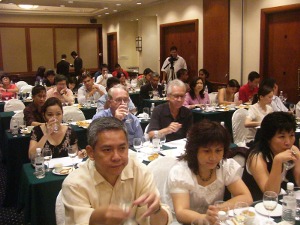
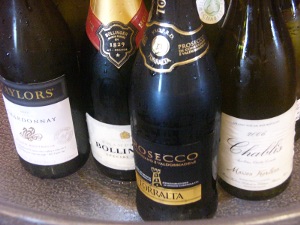
CATHY: We were doing a wine master class. I think it was a little bit of a shock for a lot of people. They didn't expect to get told as much theory as they got told. But I do believe that in some way I have to act as an ambassador for the Master of Wine in teaching people how to gauge quality of wine properly as an important part of what I do. We were tasting wines to compare different grape varieties, to compare different origins which would have been France and Australia, also adding something different - we added an Italian wine into the mix. So we looked at different varieties, different origins and different qualityÉAnd we also tasted the wines with food because I can't tell you enough the wine and foods are very good match so that you can see that what it goes and we learnt that the French champagne actually goes very well with sushi. That Chardonnay whether it comes from France or Australia goes very well with trish and that most straight wines complement cheese.
DE: You find wine buffs in Sabah discerning?
CATHY: Yes I do. I must say they have good knowledge. Maybe the people sitting in the front have good knowledge while the people in the back not so good knowledge (jokingly) but certainly the people had good knowledge. They were able to identify the French wines, the Australian wines and were able to tell the varieties.